
[ MODULE_06 / WHAT_AN_ASSET_REALLY_IS ]
Understanding assets and liquidity.
Why traders don’t trade things — they trade price.
Trading Foundations #2 — What an Asset Really Is
INITIAL_CONDITION
In the previous module, we established that trading is about capturing profit from price movement.
But what exactly is being traded?
SYSTEM_DEFINITION
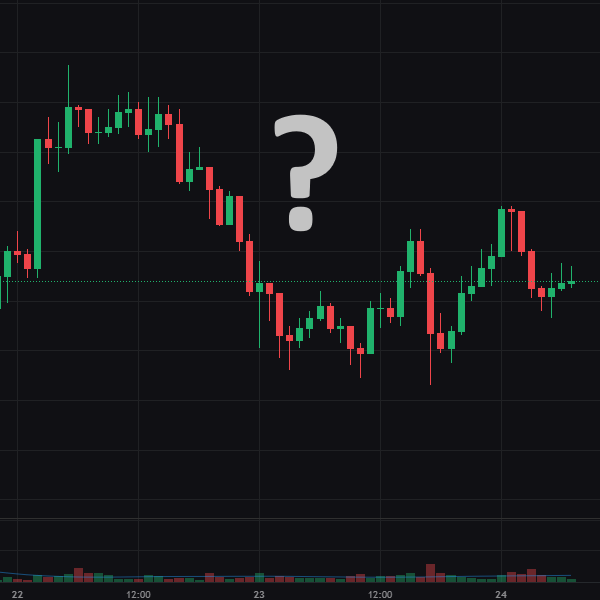
In trading, this “commodity” is called an asset.
But here’s the key idea:
An asset doesn’t have to be something physical..
An asset is anything that has two key properties:
👉 It has a price
👉 It has liquidity
PRICE
Price represents agreement.
→ Someone is willing to buy
→ Someone is willing to sell
Without participants, price has no practical meaning.
LIQUIDITY
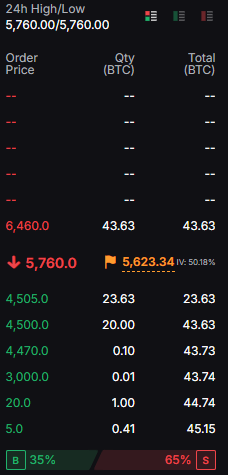
Liquidity is the ability to enter and exit the market.
→ Quickly
→ Efficiently
→ Near the current market price.
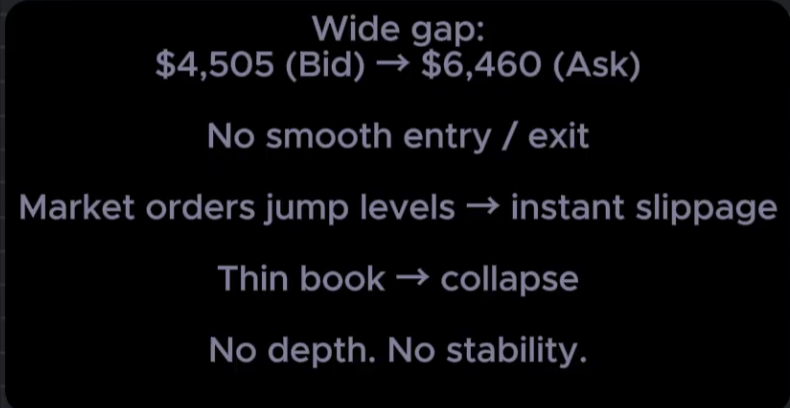
Without liquidity, price is only a number.
If you can’t enter — it’s a problem.
But if you can’t exit — it’s a catastrophe.
PRACTICAL_EXAMPLE
Imagine a rare item.
It has a price. But no one wants to buy it.
Technically, it has value.
But practically — you can’t sell it.
ASSET_TYPES
An asset doesn’t have to be tangible.
It can be:
→ Bitcoin
→ Stocks
→ Oil
→ Gold
But also:
→ Contracts
→ Derivatives
→ Even abstract financial constructs
If it has price and liquidity — it can be traded.
THE_MENTAL_SHIFT
Professional traders do not trade Bitcoin, Gold, Oil…
They trade price movement.
The underlying asset is secondary. Movement is what creates opportunity.
ABSTRACTION
This is why trading sometimes seems strange. As if people are trading “nothing”.
But in reality, they are trading:
👉 Expectations
👉 Perceived value
👉 Future demand
THOUGHT_EXPERIMENT
Imagine a new asset called “Air” appears tomorrow.
A contract for clean air.
If millions of people start buying and selling it — a market is born instantly. And traders will follow.
Because the essentials are there:
👉 price
👉 liquidity
👉 movement
CONCLUSION
Imagine a new asset called “Air” appears tomorrow.
Where price stands still — there is no trader.
And where there is a market — there is profit.
NEXT_PHASE
Now you understand what is being traded.
The next question is: Does price always need to rise to create opportunity?
Or can movement in either direction be traded?
